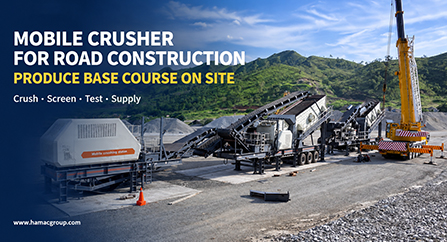




Mobile Crusher for Road Construction: How to Produce Base Course Aggregate On Site | HAMAC
Producing base course aggregate on site requires four things in place before any machine is selected: an approved feed material, the specified base course grading, a crushing and screening circuit that can produce that grading, and a production target matched to the road construction schedule. A mobile crusher reduces and sizes rock; it does not by itself approve the material or guarantee the finished blend.
Start by confirming what the pavement design requires. Then evaluate the available rock or demolition concrete, choose the crushing stages and screening arrangement, and verify the finished material by sieve analysis before supplying the base layer.
1. Is On-Site Base Production Right for Your Road Project?
On-site production is worth evaluating when the project has a suitable material source, space to crush, screen and stockpile, and enough schedule margin for mobilization and trial production. It is not a decision about equipment preference; it is a decision about material logistics.
| Project Condition | Direction to Evaluate |
|---|---|
| Long linear road site with a nearby rock source or excavation material | Mobile plant positioned close to the source, relocated as the work advances |
| Removed concrete pavement available in quantity | Crushing with steel removal and contaminant control, subject to project acceptance of recycled material |
| Short project, uncertain follow-on work, limited budget | Compare on-site production, purchased aggregate and contract crushing before buying equipment |
| Local commercial aggregate readily available at competitive delivered cost | Compare total delivered cost against on-site production cost before committing |
| Feed material not yet tested or approved for base use | Resolve material approval first; equipment selection alone cannot make unsuitable rock acceptable |
For the broader equipment-format question, including stationary, modular and mobile arrangements, read Stationary vs. Mobile Crusher Plant: Which Is Better for Your Project?.
2. Start From the Base Course Specification
The specification defines the product. Before selecting equipment, obtain the required sieve grading, maximum particle size, limits on fines and plastic material, and any strength, durability or density requirements. Whether the layer is a subbase, an unbound base course or a stabilized base matters; they are not interchangeable materials.
A screen opening or a product label such as "0–40 mm" does not establish compliance. The finished material must satisfy the complete grading envelope across all sieve sizes, not merely pass a top size. Where the specification is a dense-graded blend, producing correctly sized fractions is only the first step: the fractions may need controlled recombination, and stockpiles must be managed to avoid segregation, because separated coarse and fine piles do not automatically reconstitute the required blend.
| Information to Obtain | Why It Affects Equipment and Process |
|---|---|
| Full sieve grading envelope for the base material | Determines screen decks, openings and whether controlled blending of fractions is needed |
| Maximum particle size and oversize limits | Guides primary crusher setting and the return route for oversize material |
| Fines and plasticity limits | May require removing or limiting certain feed fractions rather than crushing everything |
| Strength, durability and density requirements | Feasibility checks on the feed material before equipment is ordered |
| Acceptance rules for recycled material | Determines whether demolition concrete can be used and under what controls |
Do not copy another project's grading as your own. Obtain the applicable project or authority specification, and treat equipment capacity figures as processing references, not guarantees of compliant product.
3. Evaluate the Feed Material and Crushing Route
The material decides the crushing route; the chassis only decides where the machines sit. Confirm hardness, abrasiveness, maximum feed size, moisture and clay before choosing between an impact route and a jaw-plus-cone route.
| Feed Material | Route to Evaluate | Key Project Checks |
|---|---|---|
| Limestone and medium-hard, low-abrasion rock | Primary jaw or impact crushing with secondary impact crushing, then screening | Moisture, clay, particle shape and fines production |
| Granite, basalt and abrasive hard rock | Primary jaw crusher, secondary cone crusher, closed-circuit screening | Wear parts, chamber and closed-side setting selection, recirculating load |
| Removed concrete pavement | Jaw or impact crushing with magnetic steel separation and contaminant removal, then screening | Reinforcement limits, soil and wood contamination, project acceptance of recycled material |
For recycled concrete used in granular base, archived FHWA user guidance describes the processing sequence: initial crushing, removal of steel by magnetic separation, then further crushing and screening to the required grading, with separate or blended stockpiles where sources differ. The same guidance notes that improperly processed material has in some cases caused tufa-like precipitates that clogged subdrains, that some agencies require washing to remove dust, and that gradation references there include AASHTO M147 and ASTM D2940. Treat this as historical technical background to check against your own authority's current requirements, not as a worldwide approval.
See the FHWA user guideline on reclaimed concrete material in granular base.
For material-based equipment selection logic, read How to Choose a Mobile Crusher for a Stone Quarry.
4. Reference Mobile Equipment Data
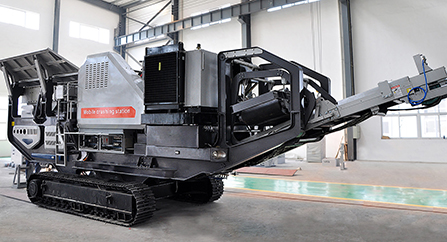
The following are independent catalogue examples of HAMAC mobile units at different crushing stages. They are not a matched production line, and the published figures are processing references under stated conditions, not guarantees for your material. A complete road-base circuit still requires correctly matched primary crushing, secondary crushing, screening and conveying, reviewed together against your feed and product specification.
| Equipment Example | Stage | Selected Published Data | Use in Selection |
|---|---|---|---|
| Tracked jaw crusher MJ150SE | Primary crushing | Maximum feed 430 mm; host model MC80; closed-side setting 40–175 mm; processing capacity 55–335 t/h; generator 150 kW; transport dimension 12,500 × 2,900 × 3,500 mm | Check feed acceptance against your largest rock; capacity depends on setting and material |
| Mobile impact crusher MHSI1315 | Secondary crushing and shaping | Impact crusher PF1315; feed opening 860 × 1,520 mm; nominal capacity 130–250 t/h; magnetic separator optional | Suitable feed must be confirmed; select the magnetic separator when processing reinforced concrete |
| Tracked cone crusher MC300HRSE | Secondary crushing of hard rock | Host model HPC300; maximum feed 225 mm; closed-side setting 6–45 mm; processing capacity 150–430 t/h; total weight 61 t | Confirm the closed-side setting range against your required product sizes |
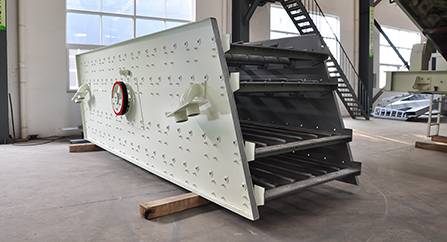
| Tracked screening plant MS-3618E | Product screening | Screen 1,800 × 6,000 mm, 3 layers; maximum feed 200 mm; feeder capacity 350 t/h; published processing range 200–500 t/h | The feeder capacity and screening range must be reviewed together; neither establishes complete-unit or circuit throughput |
Product pages: tracked jaw crusher plant, mobile impact crusher plant, tracked cone crusher plant, tracked vibrating screening plant.
Do not read a feed opening as a permitted maximum feed, or a closed-side setting as a finished-product size. For example, the MS-3618E's 200 mm maximum feed applies to the screening unit, which must be checked against the actual crusher discharge, and its 350 t/h feeder capacity must be reviewed together with the 200–500 t/h screening range for the intended circuit flow.
See the HAMAC mobile crushing plant solutions for configuration categories, including hard-rock and soft-rock portable plants.
5. Size Production to the Road Schedule
Size the plant to the quantity of compliant base material the road requires, not to an advertised capacity. Start from accepted output:
Required average compliant output (t/h) = Total compliant base material required (t) ÷ Effective production days ÷ Effective production hours per day
| Illustrative Planning Input | Example |
|---|---|
| Compliant base material required | 60,000 tonnes |
| Effective production days | 100 days |
| Effective production hours per day | 8 hours |
| Required average compliant output | 75 tonnes per hour |
Effective production hours are net crushing hours after mobilization, moves, maintenance, weather and feed interruptions, not shift hours. If converting this accepted-output requirement to a fresh-feed target, use an explicitly assumed yield. For example, at an assumed 90% saleable yield, 75 t/h of compliant product would require roughly 83 t/h of fresh feed. That yield is a hypothesis for calculation, not a HAMAC performance claim; the real yield must be established by trial production and sieve analysis.
Closed-circuit return flow is internal loading, not additional saleable production and not automatically a loss. Equipment that receives both new feed and returned oversize must be assessed for the combined flow. For example, 75 t/h of new feed plus an assumed 20 t/h return creates 95 t/h at equipment handling both streams; the return quantity is illustrative only.
For capacity-based configuration references at 100, 150, 200 and 300 TPH levels, read How Much Does a Mobile Crusher Cost? Price Factors and Buyer's Guide.
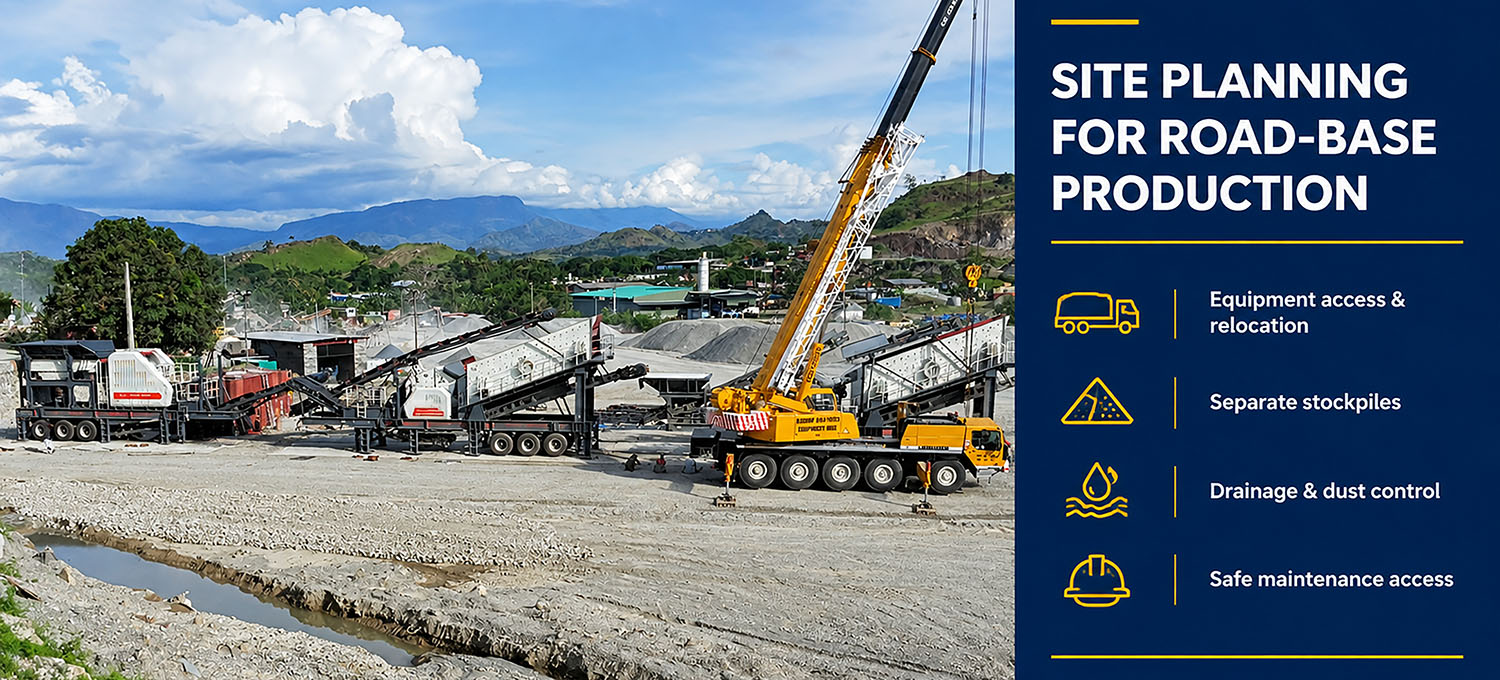
6. Organize the Site and Keep Production Consistent
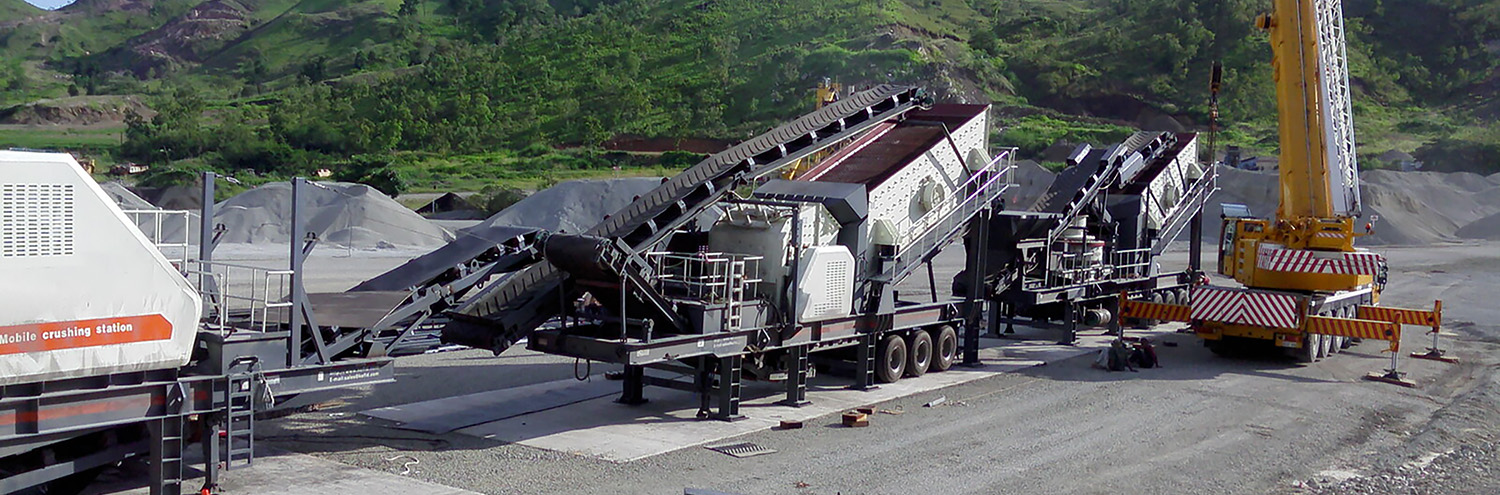
A mobile plant still needs a workable site. Plan the layout before mobilizing equipment.
| Site Element | What to Check |
|---|---|
| Feed area | Excavator or loader access, stable ground, space for oversized rock handling |
| Plant positions | Crusher, screen and conveyor connections; relocation route as work advances |
| Product stockpiles | Separate fractions where blending is required; stockpile height and handling to limit segregation |
| Haul and placement | Route to the placement area that does not cross the crushing operation |
| Utilities and environment | Power or fuel supply, water for dust control and any washing, drainage and noise controls |
| Maintenance | Access for wear-part changes and safe inspection without dismantling conveyors |
Maintain consistent feed to the crusher and avoid loading the screen in surges, because unstable feed degrades both capacity and grading consistency. Record sieve analyses during production so that grading drift is detected early rather than discovered in the placed layer.
7. Compare On-Site Production With Purchased Aggregate
Compare cost per tonne of compliant, delivered base material over the same period, using the same quality requirements.
| On-Site Production Includes | Purchased Aggregate Includes |
|---|---|
| Equipment purchase allocation or rental and mobilization | Material purchase price |
| Fuel or power, operators, loader and maintenance | Delivery transport to site |
| Wear parts and downtime between moves | Handling and stockpiling at site |
| Testing, trial production and rejected-material handling | Supplier testing and compliance documentation |
| Relocation between sections and demobilization | Supply risk if local sources are constrained |
On-site crushing near the material source can reduce raw-material hauling, but equipment transport, relocation and product handling still cost money. There is no universal percentage saving; the comparison must use your own quantities, distances and rates. Where feed material is uncertain, resolve material approval before either option is priced.
Frequently Asked Questions
Can a mobile crusher produce base course aggregate on site?
Yes, when the feed material is approved for base use and the crushing and screening circuit is configured to the specified grading. The crusher produces sizes; compliance is confirmed by testing the finished material against the project specification.
Is a jaw crusher alone enough for base material?
It depends on the feed and the specified grading. A jaw crusher reduces large rock, but many base specifications require secondary crushing and screening to reach the required grading and top size. A single-stage answer should be confirmed against the actual specification rather than assumed.
Can recycled concrete be used as road base?
It is used in granular base in many jurisdictions, subject to processing controls such as steel removal, contaminant limits and grading requirements. Acceptance depends on your project and authority requirements, and drainage-sensitive applications may need additional controls.
How do I size the crusher for my road project?
Divide the total compliant base material required by the effective production days and daily hours to obtain an average compliant-output requirement. Then add allowances for trial production, moves and maintenance, and check the equipment's published capacity against the actual feed and setting.
Request a Road-Base Crushing Configuration
Send HAMAC the material details, base course specification and schedule so a mobile crushing and screening configuration can be reviewed against your project.
| Information to Send | Details |
|---|---|
| Feed material | Rock type or recycled concrete, photos, maximum feed size, moisture and clay, test data if available |
| Base specification | Required grading envelope, maximum size, fines and plasticity limits, acceptance rules for recycled material |
| Production requirement | Total compliant tonnage, completion date, effective production hours per day |
| Site and mobility | Site layout, relocation frequency, transport access, power and water availability |
| Project location | Country, applicable specification or authority, delivery conditions |
Contact HAMAC for an On-Site Base Course Aggregate Production Recommendation