





Crusher Plant Quotation Checklist: What Information Do Suppliers Need? | HAMAC
Crusher Plant Quotation Checklist: What Information Do Suppliers Need?
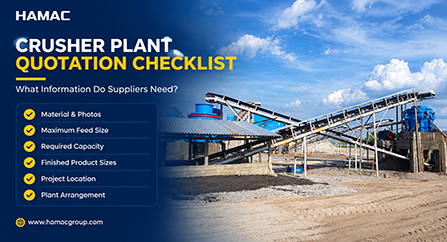
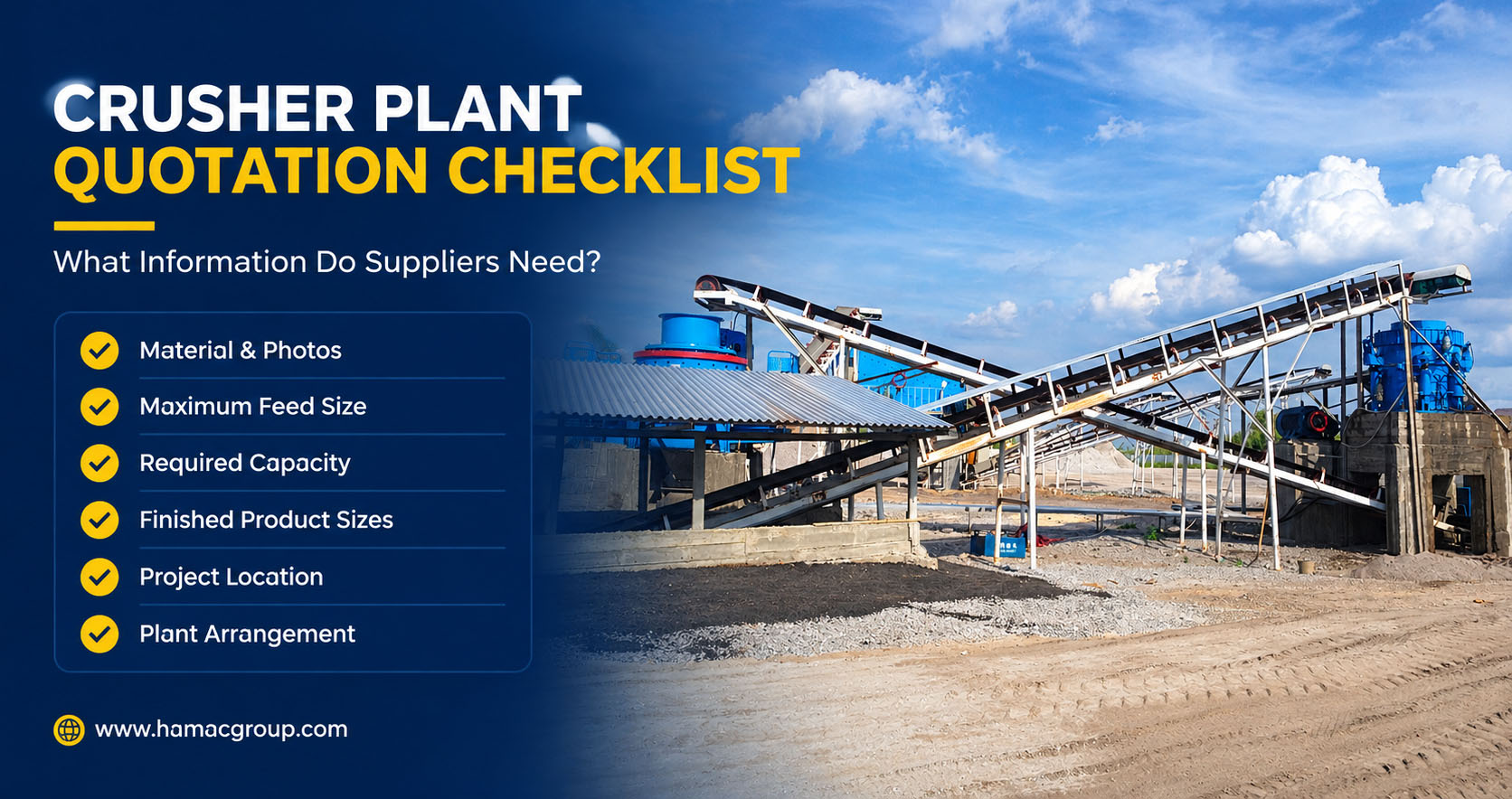
To start a crusher plant quotation, send six details: material type, maximum feed size, required capacity, finished-product sizes, project location and preferred plant arrangement. Add photos whenever possible.
You do not need a complete engineering package to begin. However, missing information should be marked as “to be confirmed” so the supplier can state the assumptions behind an initial recommendation.
Use the checklist below to prepare a stone crushing plant RFQ, clarify the supply scope and compare quotations on the same basis. RFQ means Request for Quotation.
1. Send These Six Details for an Initial Quotation
| Required Information | What to Send | Why the Supplier Needs It |
|---|---|---|
| Material | Rock or material name, application and representative photos | Helps identify the crushing route and material-related risks |
| Maximum feed size | Largest expected piece in mm; include slab dimensions where relevant | Determines feed acceptance, hopper requirements and primary crusher selection |
| Required capacity | Target tonnes per hour and whether this means fresh feed or saleable finished output | Defines the production basis for the complete system |
| Finished products | Required sizes, intended use and target proportions if known | Determines crushing stages, screening and product handling |
| Project location | Country, jobsite location and preferred delivery point or port | Supports transport, utilities, service and delivery planning |
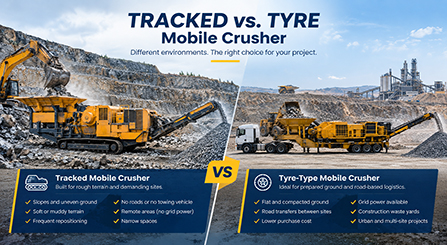
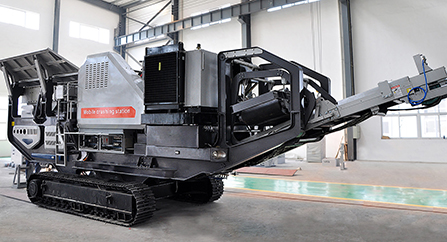
| Plant arrangement | Stationary, wheeled, tracked, modular, existing-plant upgrade or “please recommend” | Defines the equipment format and installation approach |
For example: “We need to process granite with a maximum feed size of 500 mm. The target is 200 metric tonnes per hour of fresh feed. Required products are 0–5, 5–10, 10–20 and 20–31.5 mm. The project is in [country]. Please compare a stationary arrangement with a relocatable option.”
This example starts the discussion; it is not a complete design specification. Material condition, product proportions, operating time and site requirements still need confirmation.
If you have not selected a plant format, read Stationary vs. Mobile Crusher Plant: Which Is Better for Your Project?.
2. Add Technical Details for a More Accurate Proposal
A maximum feed size and a TPH target are not enough to confirm the final configuration. Provide the following information when available, particularly for EPC procurement, performance commitments or an existing-plant upgrade.
| Technical Detail | Useful Information or Units | Effect on the Proposal |
|---|---|---|
| Feed grading | Typical particle-size distribution or sieve analysis, not only the largest rock | Influences pre-screening, crusher loading and material routing |
| Material properties | Moisture and clay content; hardness, abrasiveness or test results where available | Influences wear, handling, screening and process suitability |
| Bulk density | t/m³, if known | Helps relate volumetric handling capacity to mass flow |
| Product requirements | Sizes in mm, target percentages, grading, shape and cleanliness requirements | Influences screening, recirculation, shaping and optional washing |
| Production schedule | Effective hours per day, production days, total project tonnes and completion date | Connects the plant capacity with the actual production task |
| Power and utilities | Voltage, frequency, available electrical supply, fuel, water and drainage | Defines drive, electrical and utility interfaces |
| Site and mobility | Site plan, terrain, access, elevation, temperature range and relocation frequency | Influences layout, transport and installation requirements |
| Existing equipment | Models, nameplates, settings, dimensions, process flow and connection points | Helps assess whether new equipment can work with the existing plant |
| Environmental requirements | Applicable dust, noise, water and project specifications | Defines necessary controls and associated supply responsibilities |
State units clearly. In your RFQ, define “t/h” as metric tonnes per hour, where one metric tonne equals 1,000 kg. Do not interchange t/h and m³/h without the material bulk density.
Mass Flow (t/h) = Volume Flow (m³/h) × Bulk Density (t/m³)
Also distinguish fresh feed from internal circuit flow. As an illustration, 200 t/h of new material plus an assumed 60 t/h return stream creates 260 t/h at equipment receiving both streams. The return quantity is an example, not a standard design ratio.
For concrete recycling, include reinforcement and contaminants. Photos should show the actual mix of concrete, steel, soil, wood or other material—not only the cleanest sample.
3. Why Feed Size and Product Requirements Change the Equipment
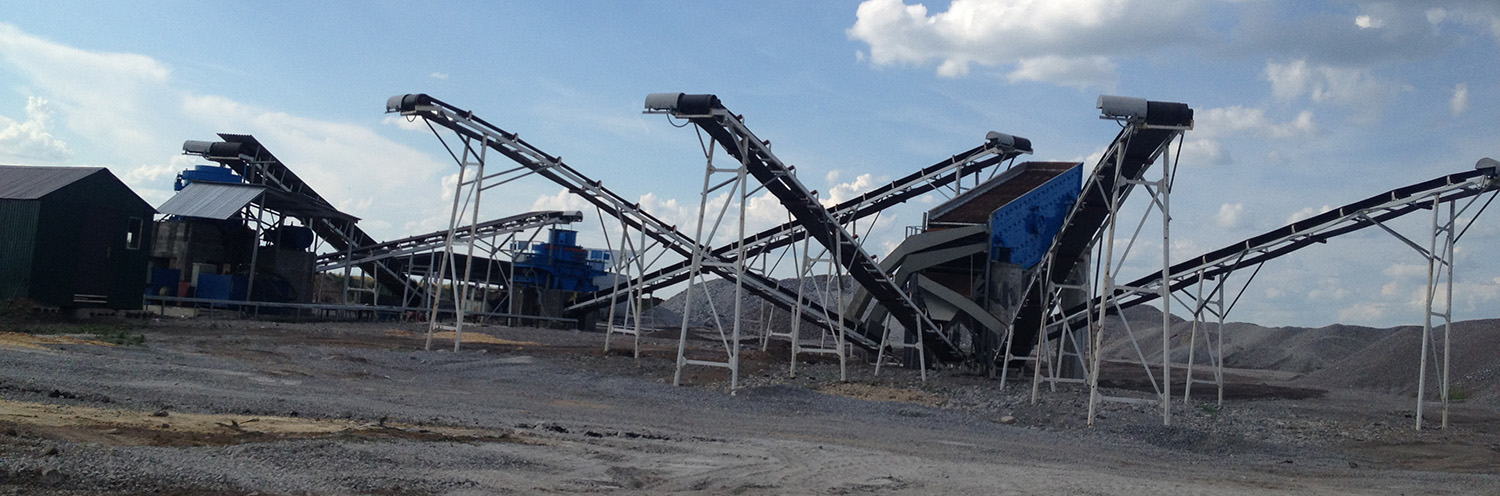
HAMAC's published PE jaw crusher data illustrates why a supplier needs more than a capacity number.
| HAMAC Model | Feed Opening | Maximum Feed Size | Published Capacity | Published Motor Power |
|---|---|---|---|---|
| PE600×900 | 600 × 900 mm | 500 mm | 80–180 t/h | 55–75 kW |
| PE750×1060 | 750 × 1060 mm | 630 mm | 110–320 t/h | 90–110 kW |
| PE900×1200 | 900 × 1200 mm | 780 mm | 220–450 t/h | 110–132 kW |
Source: HAMAC PE Series Jaw Crusher technical data.
A 200 t/h target falls within the PE750×1060 published range, but this alone does not confirm suitability. A 700 mm feed piece exceeds that model's listed 630 mm maximum feed size. The selected discharge setting, material condition and next crushing stage must also be checked.
These values describe individual machines, not guaranteed complete-plant output. The supplier should explain why each proposed model matches the stated design basis.
4. Define the Scope of Supply Before Comparing Prices
A low quotation may cover only the main crusher. Another quotation may include a complete crushing and screening system. Ask suppliers to mark each item as “included,” “excluded” or “to be confirmed.”
| Supply Item | What to Clarify |
|---|---|
| Receiving and feeding | Hopper, feeder, pre-screen and associated chutes |
| Crushing and screening | Models, quantities, screen media and specified wear parts |
| Conveyors | Transfer, return and product conveyors; lengths, supports and drives |
| Structures and access | Frames, platforms, walkways, guards, supports and lifting provisions |
| Electrical scope | Motors, control panels, drives, sensors, site cabling and power interfaces |
| Environmental and optional systems | Dust suppression, extraction, washing, metal separation and drainage interfaces |
| Civil works | Foundation information, structural design responsibilities, construction and installation boundaries |
| Delivery | Packing, freight, insurance, loading, unloading and delivery point |
| Services and documents | Assembly guidance, commissioning, training, manuals, drawings and test arrangements |
| Spare and wear parts | Initial package, quantities, part specifications and replenishment arrangements |
Do not assume the words “complete plant” or “turnkey” automatically include every item above. Require a written scope and responsibility schedule.
For international purchases, specify the delivery rule, named place or port, and applicable edition. For example, “FCA [named place], Incoterms® 2020” is more precise than “FCA” alone. Select a rule appropriate to the shipment rather than using one term for every transport arrangement.
Incoterms allocate important delivery responsibilities, costs and risks, but they do not replace the agreed equipment specification, payment terms, warranty or performance conditions. See the U.S. International Trade Administration's Incoterms guidance.
5. What Should a Useful Crusher Plant Quotation Contain?
Before comparing the final price, check whether each supplier has used the same material, feed, output target, products and supply scope.
| Quotation Check | What to Request |
|---|---|
| Design basis | Material assumptions, feed size, capacity definition, products and operating conditions |
| Equipment schedule | Model, quantity, principal parameters, power and included accessories |
| Process and layout | Recommended flow and available preliminary layout or interface information appropriate to the quotation stage |
| Scope and exclusions | Included items, excluded items and customer responsibilities |
| Commercial terms | Currency, delivery basis, named location, quotation validity and payment conditions |
| Delivery schedule | Lead time and the event from which it is counted, such as payment and technical approval |
| Support | Warranty conditions, commissioning, training and spare-parts arrangements |
| Performance verification | Any proposed guarantees, measurement method, operating conditions and acceptance responsibilities |
A preliminary budget proposal and a final technical-commercial offer may contain different levels of detail. Ask which assumptions remain open before using a price for procurement approval.
If performance is guaranteed, define the feed conditions, product criteria, test duration, measurement method and treatment of interruptions in the contract. Do not interpret a catalogue capacity range as a complete performance guarantee.
6. Copy-and-Send Crusher Plant RFQ Template
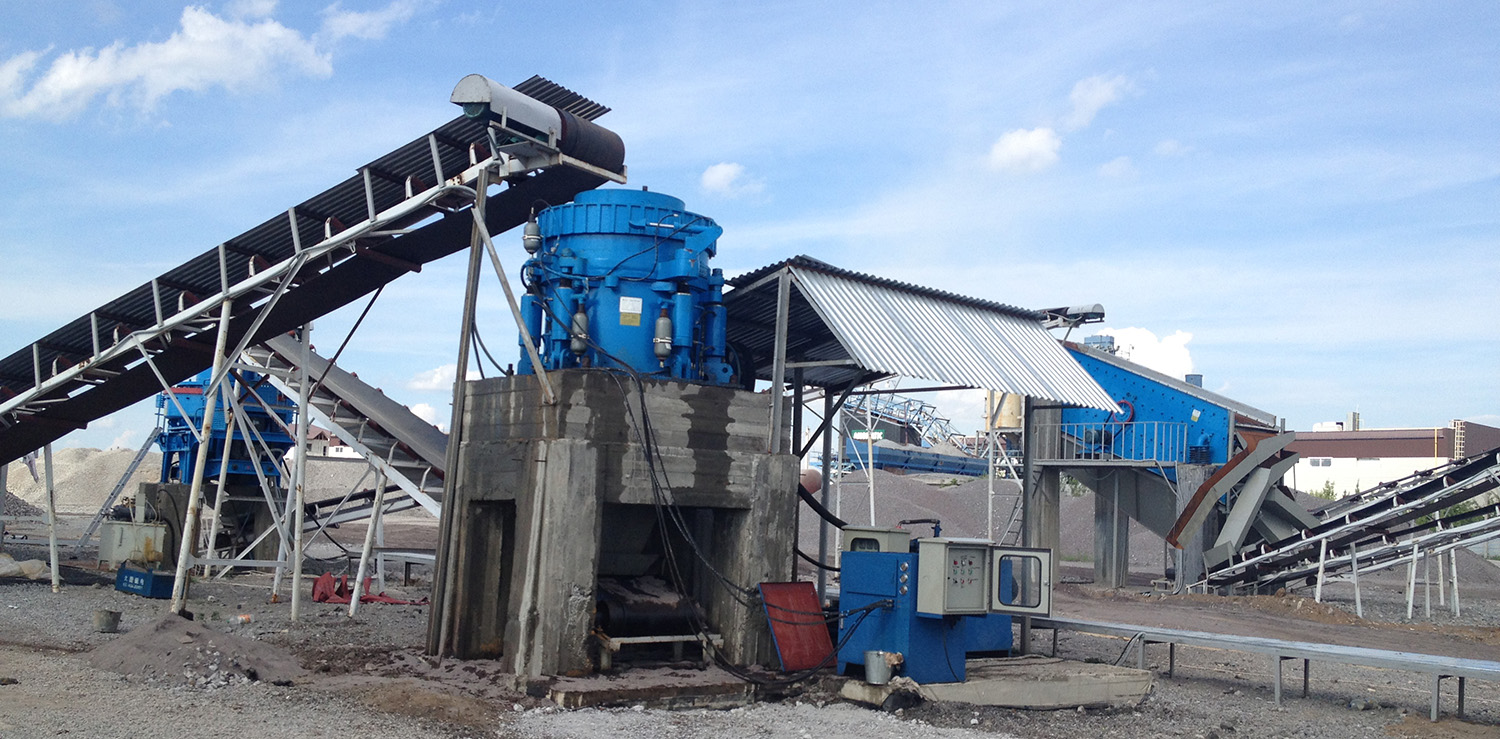
Use the following template to prepare a quarry crushing plant RFQ, mobile crushing plant quotation request or existing-plant upgrade inquiry. Mark unknown items as “to be confirmed.”
Subject: Crusher Plant RFQ – [Material] – [Target t/h] – [Country]
Material and application: [ ]
Maximum feed size, mm: [ ]
Typical feed grading: [ ]
Moisture, clay and abrasiveness, if known: [ ]
Required capacity, metric t/h: [ ]
Capacity basis: [Fresh feed / Saleable output]
Finished-product sizes and target proportions: [ ]
Product end use and quality requirements: [ ]
Effective working hours per day: [ ]
Project total volume and duration: [ ]
Plant arrangement: [Stationary / Wheeled / Tracked / Modular / Please recommend]
Project country and jobsite: [ ]
Available power: [Voltage / Frequency / Capacity]
Water supply and environmental requirements: [ ]
Relocation requirements: [ ]
Existing equipment and interfaces: [ ]
Required scope of supply: [ ]
Preferred delivery basis and named place or port: [ ]
Target delivery date: [ ]
Attachments: [Material photos / Test information / Site plan / Existing equipment data]
Please state your recommended configuration, design assumptions, included and excluded items, utility requirements, delivery terms and service scope.
Frequently Asked Questions
Can I request a crusher plant quotation without a material test report?
Yes. Start with the material name, representative photos, maximum feed size, capacity and products. Explain which properties are unknown. The initial proposal may depend on assumptions, with further testing or confirmation needed before final selection.
Is “200 TPH” enough information for a complete quotation?
No. State the material, feed conditions, finished products, operating time and whether 200 t/h refers to fresh feed or saleable output. The same capacity target can lead to different equipment and supply scopes.
Why are crusher plant quotations so different?
Suppliers may be quoting different models, stages, conveyors, controls, structures, services or delivery conditions. They may also be working from different assumptions. Compare the technical basis and scope before comparing the total price.
What should I send for an existing-plant upgrade?
Provide the current process flow, equipment models and nameplates, settings, actual operating data, product requirements and site layout. Include photos and identify the problem or expansion target so equipment interfaces can be reviewed.
Request a HAMAC Project-Based Crushing Plant Quotation
Not sure which equipment your project needs? Start with your material photos, maximum feed size, target capacity, required products and project location.
HAMAC can review the available information, discuss the configuration and identify what still needs confirmation before a more detailed proposal is prepared.
Send Your Project Details for a Crushing Plant Recommendation and Quotation