



1
Case Study: Manufactured Sand Washing Plant in Peru for Construction Sand
A quarry and aggregate producer in Peru installed a complete wet-process manufactured sand washing and fines recovery system to produce high-grade 0–5 mm sand for local commercial concrete batching plants. The plant integrates twin-screw scrubbing, bucket wheel washing, hydrocyclone fines recovery, and a closed-circuit water clarification system to meet concrete sand specifications while minimizing water loss.
Manufactured sand (M-sand) produced from crushed rock often carries excessive stone powder, silt, or clay films that increase concrete water demand and weaken compressive strength. In Peru's developing infrastructure and construction markets, concrete suppliers strictly regulate fine aggregate cleanliness and grading consistency according to international standards such as ASTM C33 Standard Specification for Concrete Aggregates.
1. Project Overview and Site Requirements in Peru
| Project Item | Operational Condition in Peru |
|---|---|
| Raw Material | Crushed rock manufactured sand (0–5 mm / 0–10 mm raw feed) |
| Main Contaminants | Excess rock dust, quarry silt, and fine clay coatings |
| Target Finished Product | Clean, continuous-graded construction sand (0–5 mm) for ready-mix concrete |
| Key Technical Goals | Reduce fines (<75 μm / No. 200 sieve) to standard limits, recover 0.075–0.16 mm fine sand, and recycle process water |
| Local Service Support | Technical support coordinated through the HAMAC Peru Office in Ica |
Traditional single-stage washing setups often suffer from severe fine sand loss, which washes away valuable 0.075–0.16 mm particles along with the clay. This causes an unbalanced fineness modulus (FM) and reduces total saleable tonnage. The Peruvian customer required a closed-circuit washing and recovery configuration to guarantee product quality and commercial yield.
2. Multi-Stage Washing and Fines Recovery Process Flow
The operational video demonstrates a coherent five-stage washing, classification, recovery, dewatering, and water management circuit designed for steady operation:
| Stage | Equipment Unit | Functional Role in the Peru Plant |
|---|---|---|
| 1. Primary Scrubbing | Twin-Screw Sand Washer | Intense blade attrition scrubs clay coatings from stone particles and separates bulk mud into overflow slurry. |
| 2. Secondary Washing | Bucket Wheel Sand Washer | Re-washes the material in clean water, lifts the coarse fractions, and performs initial gravity drainage. |
| 3. Slurry Concentration | Slurry Pump & Hydrocyclone | Collects overflow wastewater and uses centrifugal force to separate usable fine sand (0.075–0.16 mm) from waste mud. |
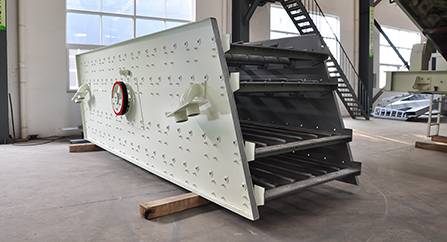
| 4. Final Dewatering | High-Frequency Dewatering Screen | Blends recovered cyclone fines with washed sand on a polyurethane screen deck, reducing surface moisture for stacking. |
| 5. Water Clarification | Sedimentation Tank / Clarifier | Treats muddy overflow with flocculant settling, returning clear water back to the washers in a closed loop. |
This combined route ensures that raw manufactured sand is thoroughly scrubbed before final dewatering, avoiding mud balls and preventing valuable fines from escaping into settling ponds.
3. Core Equipment Specifications and Technical Data
HAMAC provides both screw-type and wheel-type washing systems alongside cyclone recovery units to suit varying clay concentrations and throughput requirements. Key reference data from HAMAC's published washing equipment range includes:
| Equipment Type | Key Published Parameters | Operational Application |
|---|---|---|
| Screw Type Sand Washing Machine | Feeding size: ≤10 mm; Capacity range: 20–350 m³/h; Water consumption: 60–300 t/h; Polyurethane wear-resistant blade ends | Handles high-silt raw feed with intensive spiral agitation and adjustable overflow weir height. |
| Wheel Sand Washing Machine | Bucket wheel rotation speed: 1–3 rpm; Continuous bucket scooping with minimal drive-mechanism water contact | Low-maintenance secondary rinsing and aggregate lifting with minimal power consumption. |
| Fine Sand Recovery & Dewatering Unit | Polyurethane screen openings: 0.1–1.0 mm; Hydrocyclone separation efficiency down to 0.075 mm; Final moisture: 12–15% | Recovers 85–95% of fine sand from overflow slurry and blends it directly into the finished product stream. |
Source: HAMAC Screw Sand Washer Technical Specifications. Specific model capacity and motor power depend on feed gradation and slurry density.
To understand the upstream crushing and shaping stages that feed this washing plant, explore the HAMAC Guide on Selecting a Sand Making Machine for Manufactured Sand.
4. Operational Results and Sand Quality Improvement
Operating data from the Peruvian installation demonstrates measurable improvements in both aggregate quality and plant efficiency:
| Quality & Economic Indicator | Before Washing / Unmanaged Circuit | After HAMAC Multi-Stage Washing Plant |
|---|---|---|
| Silt & Clay Content (<75 μm) | 8.0% – 14.0% (Unacceptable for high-grade concrete) | Reduced to ≤2.5% (Complies with ASTM C33 / NTP standards) |
| Fine Sand Retention (0.075–0.16 mm) | Severe loss into settling ponds (>60% lost) | Up to 90% recovered and recombined via hydrocyclone unit |
| Fineness Modulus (FM) Stability | Erratic (2.9 – 3.6 due to missing fine fractions) | Stable within target 2.4 – 2.8 concrete sand grading envelope |
| Finished Product Moisture | >22% (Wet sludge, difficult to load or convey) | Reduced to 12% – 15% directly off the dewatering screen |
| Fresh Water Conservation | High continuous discharge to open lagoons | Over 80% process water recycled through sedimentation clarifier |
By stabilizing the fine aggregate gradation and eliminating deleterious clay coatings, the customer successfully secured long-term aggregate supply contracts with local ready-mix concrete producers in Peru.
5. Why Aggregate Producers in Peru Choose HAMAC
Setting up an aggregate washing plant in Latin America requires robust machinery suited for abrasive stone and reliable regional support:
- Wear-Resistant Engineering: Spiral blades feature replaceable polyurethane protection plates and wear-resistant alloy liners, significantly extending maintenance intervals when processing abrasive quartz or volcanic sand.
- Complete Circuit Customization: HAMAC designs balanced systems from feed hoppers and vibrating feeders through crushers, screens, washing units, and water treatment systems.
- Local Service in Peru: With a permanent local branch (Ica, Peru), HAMAC provides on-site engineering consultations, rapid spare parts delivery, installation guidance, and technical training for plant operators.
For large-scale aggregate operations requiring complete crushing and sizing infrastructure, read the HAMAC 300 TPH Crushing and Screening Plant Guide.
Frequently Asked Questions
Why is a hydrocyclone fine sand recovery unit necessary in a sand washing plant?
Standard screw or wheel washers discharge water that carries away fine sand between 0.075 mm and 0.16 mm. A hydrocyclone and dewatering screen recover these critical fines, preventing aggregate gradation gaps and increasing total saleable production by 10% to 15%.
What is the difference between a screw sand washer and a wheel sand washer?
A screw washer provides stronger scrubbing action and longer retention time, making it ideal for materials with high clay and silt content. A wheel washer uses less water and power for cleaner, free-flowing sand. Combining both delivers optimal results for difficult raw feeds.
Can process water be recycled in an aggregate washing plant?
Yes. By pairing the washing plant with a thickener/clarifier and filter press, 80% to 90% of the wash water can be cleaned and returned to the circuit, drastically reducing freshwater intake and eliminating environmental runoff.
Request a Manufactured Sand Washing Solution for Your Project
Whether you are upgrading an existing quarry washing line or designing a new manufactured sand facility in Peru or Latin America, send HAMAC your project parameters to receive a customized plant proposal.
| Required Information | Project Details to Provide |
|---|---|
| Raw Feed Properties | Material type (limestone, river stone, granite), raw size (e.g., 0–5 mm), silt/clay percentage |
| Capacity Target | Desired washed sand output (t/h or m³/h) |
| Target Product Specs | Concrete sand, masonry sand, or industrial filter sand requirements |
| Water & Power Conditions | Fresh water availability, sedimentation pond area, grid power supply |
| Project Location | Region/Country (e.g., Lima, Ica, Arequipa, Peru) for logistics and local support planning |