



How to Design a Stone Crushing Plant by Capacity: 100 TPH, 200 TPH and 300 TPH | HAMAC
How do you design a 100 TPH, 200 TPH or 300 TPH stone crushing plant? Capacity is the starting point, but it is not the complete design. A reliable crushing and screening plant must match the raw material, maximum feed size, required aggregate sizes, operating schedule, site layout and future expansion plan.
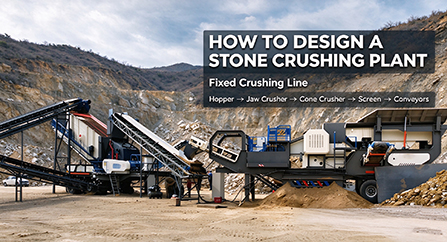
A complete stone crushing plant normally includes a hopper, vibrating feeder, primary crusher, secondary or tertiary crusher, vibrating screen, belt conveyors, return conveyor and finished-product stockpiles. Depending on the project, a sand making machine, sand washing machine, dust-control system and automatic control system may also be required.
HAMAC provides stationary crushers, modular crushing plants, tyre type mobile crushers, tracked crushing plants, jaw crushers, impact crushers, cone crushers, vibrating screens, vibrating feeders, belt conveyors and sand washing equipment for aggregate, quarry, mining and recycling projects.
1. What Material Will You Crush?
The first question is not “Which crusher should I buy?” It is “What material will I process?” Limestone, granite, basalt, river stone and recycled concrete do not require the same crushing route.
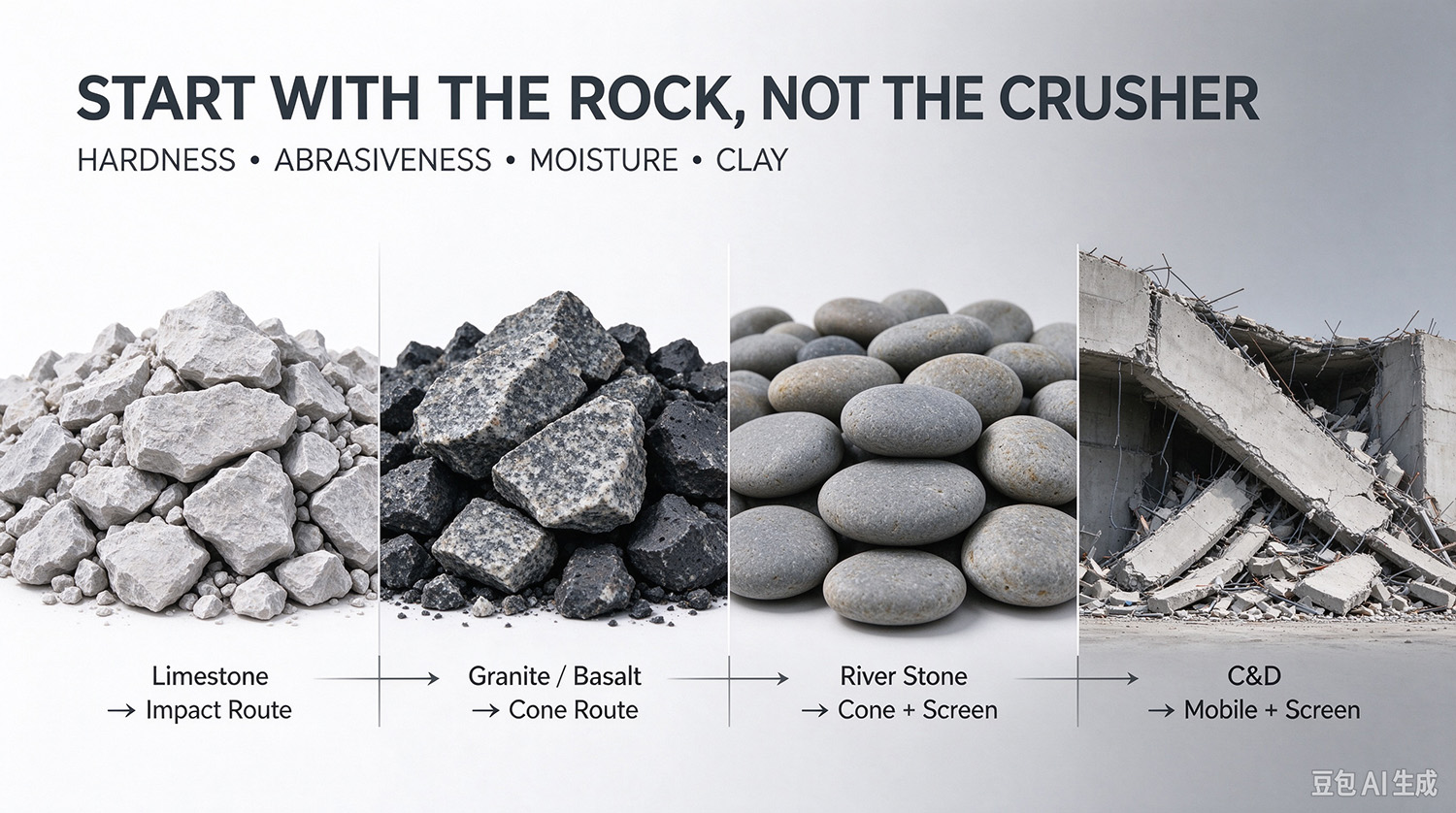
Material hardness, abrasiveness, moisture, clay content, fines content, maximum block size and contaminants all affect equipment selection, wear cost, crushing stages and final aggregate quality.
| Material Type | Typical Process Direction | Key Factors to Confirm |
|---|---|---|
| Limestone, dolomite and softer rock | Vibrating Feeder + Jaw Crusher + PF Impact Crusher + Vibrating Screen | Moisture, clay, product shape and fines requirement |
| Granite, basalt and hard rock | Vibrating Feeder + Jaw Crusher + Cone Crusher + Vibrating Screen | Abrasiveness, liner wear, closed-side setting and recirculating load |
| River stone | Jaw Crusher + Cone Crusher + Screen | Rock shape, hardness and manufactured-sand requirement |
| Concrete, brick and construction waste | Mobile Jaw Crusher or Mobile Impact Crusher + Screening Plant | Rebar, contaminants, dust control and relocation frequency |
| High-clay or wet material | Pre-screening + suitable feeding + crushing and screening | Screen blinding, material adhesion, drainage and rainy-season operation |
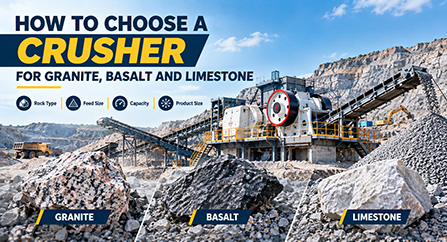
For many aggregate projects, limestone is commonly processed through a jaw crusher and impact crusher route, while granite and basalt commonly use a jaw crusher and cone crusher route. This is a planning direction only; final configuration must be confirmed by the actual material, feed size, finished product requirements and operating conditions.
For more material-based crusher selection guidance, read How to Choose a Crusher for Granite, Basalt and Limestone.
2. What Is the Maximum Feed Size?
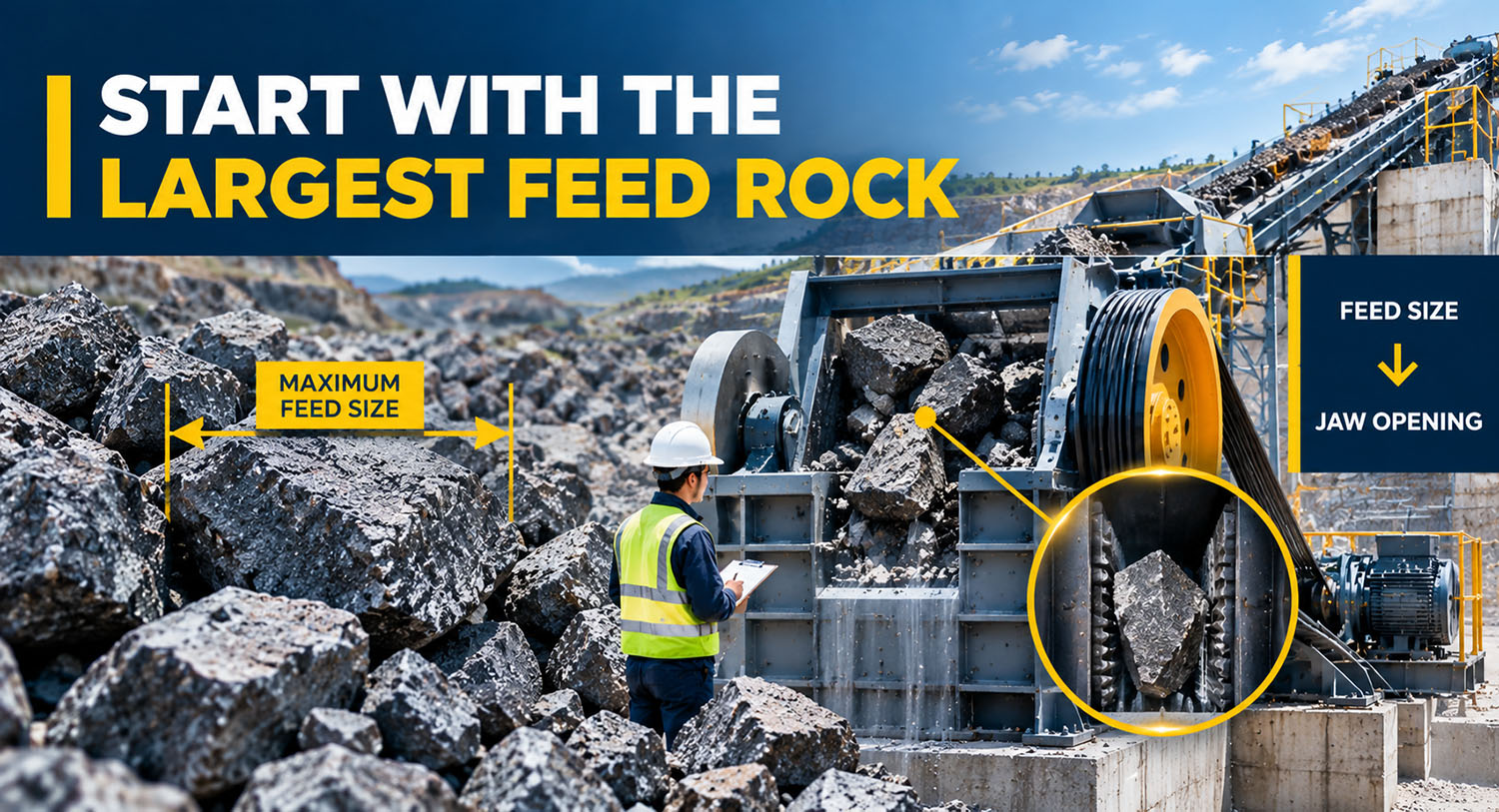
Maximum feed size determines the hopper, vibrating feeder, pre-screening section and primary crusher feed opening. A crusher can lose output or block when oversized rocks enter the chamber, especially when feed is uneven or slab-shaped.
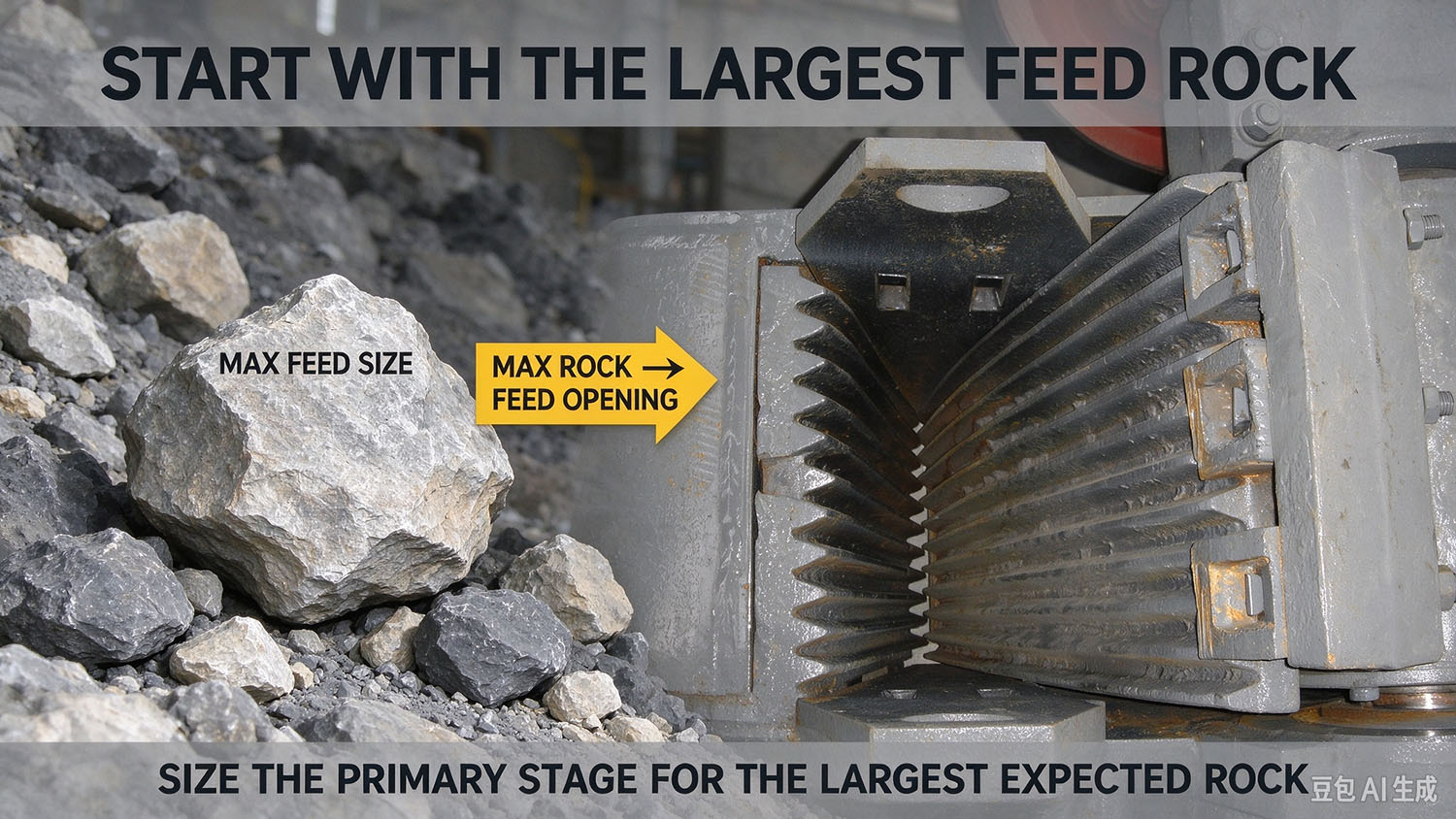
As a general planning reference, maximum feed size is commonly kept within approximately 60% to 80% of the primary crusher feed opening. Final selection should also consider material shape, feed-size distribution, feeder design and operating practice.
Before choosing a jaw crusher, confirm the largest expected rock size in millimeters, not only the average rock size. If oversized rock occurs regularly, it may require secondary breaking, improved blasting control or a larger primary crusher feed opening.
The overall crushing process should also avoid unnecessary oversize entering the crusher. Industry process-planning guidance highlights that oversize boulders can affect feeder and crusher performance, increase handling difficulty and raise wear and maintenance requirements.
3. What Finished Aggregate Sizes Do You Need?
The required final products determine the number of screening decks, the screen openings, the return circuit, the number of product conveyors and the stockpile layout. A plant producing one road-base product is not designed in the same way as a plant producing several concrete aggregate sizes and manufactured sand.
| Finished Product Requirement | Typical Equipment or Process Requirement |
|---|---|
| Two or three standard aggregate sizes | Multi-deck vibrating screen and separate product conveyors |
| 0-5 mm, 5-10 mm, 10-20 mm and 20-31.5 mm products | Multi-deck screening, product separation and closed-circuit return conveyor |
| High-quality concrete aggregate | Controlled gradation, suitable particle shape and low unwanted fines |
| Manufactured sand, such as 0-5 mm | Sand making machine, fine screen and optional washing or fines-recovery system |
| Strict particle-shape requirement | Evaluate impact crushing, cone crushing in closed circuit or VSI shaping |
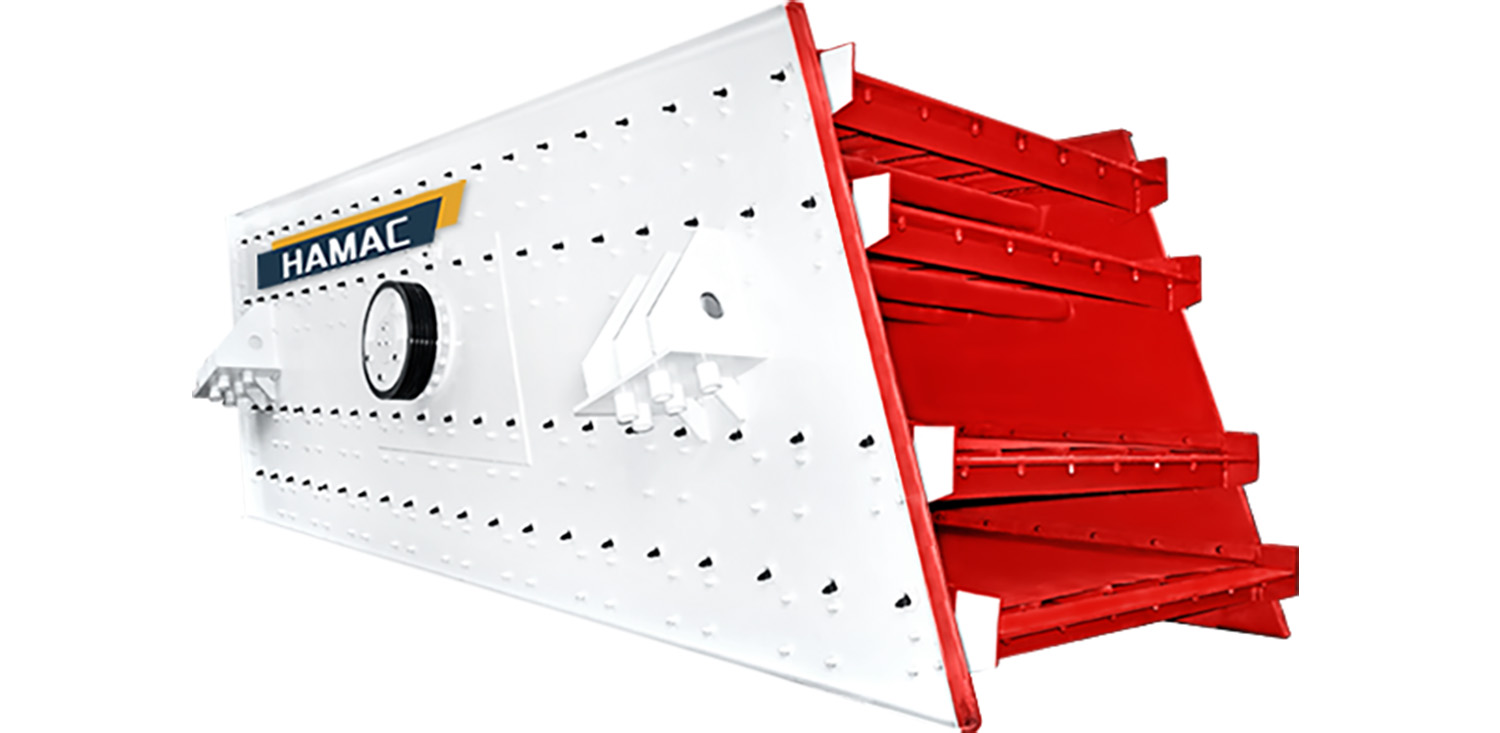
The flowsheet should be designed around saleable products, not only total tonnage. More finished-product sizes usually require more screening capacity, more conveyors, more stockpile space and better product-separation planning.
For broader industry context, crushed stone is a major raw material for construction and related industries; its value depends heavily on consistent grading and suitability for the intended application. See USGS crushed stone statistics and information.
4. What Capacity and Operating Schedule Are Required?
When customers say “I need a 200 TPH crushing plant,” the next question should be whether this means rated machine capacity, average feed capacity or stable saleable output after screening. The most useful project target is stable output of qualified aggregate at the required sizes.
Required Hourly Capacity = Target Daily Saleable Output ÷ Planned Operating Hours
For example, a project targeting 1,600 tonnes of saleable aggregate per day over two 8-hour shifts needs an average saleable output target of 100 TPH. Actual equipment selection should still include reasonable planning allowance for feed variation, routine maintenance, screen efficiency and return material.
| Target Capacity | Typical Project Direction | Main Design Focus |
|---|---|---|
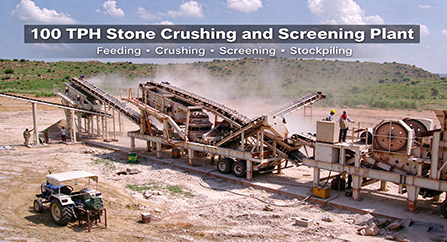
| 100 TPH | Small quarry, local aggregate supply, regional construction project or compact recycling operation | Stable feeding, compact layout, basic multi-size screening and simple stockpiling |
| 200 TPH | Commercial aggregate supply, concrete aggregate production, road construction and medium quarry operation | Screen capacity, closed-circuit return, multiple products and future expansion |
| 300 TPH | Long-term quarry, infrastructure supply, large aggregate project or hard-rock production operation | System balance, automation, dust control, maintenance access and multi-product logistics |
A capacity figure alone does not define the correct equipment. Plant throughput is affected by feed size, material hardness, moisture, clay, crusher settings, screen efficiency, recirculating load and operating discipline.
Detailed capacity guides can be developed as separate pages for 100 TPH stone crushing plants, 200 TPH stone crushing plants and 300 TPH stone crushing plants.
5. How Many Crushing Stages Are Needed?
The number of crushing stages depends on total reduction required from the largest feed material to the final products. Harder rock normally requires more controlled crushing stages than softer rock. More equipment does not automatically create a better plant; each stage should have a clear purpose.
| Project Condition | Typical Crushing Direction |
|---|---|
| Large feed material and standard aggregate sizes | Primary Jaw Crusher + Secondary Impact Crusher or Cone Crusher + Screen |
| Hard rock with multiple aggregate sizes | Jaw Crusher + Cone Crusher + Multi-Deck Screen + Closed-Circuit Return |
| High proportion of fine aggregate or manufactured sand | Jaw Crusher + Cone or Impact Crusher + Sand Making Machine + Fine Screen |
| Smaller feed, soft material and simple product requirement | Evaluate a simplified process after confirming capacity and product quality |
| Concrete and construction-waste recycling | Mobile Jaw or Impact Crusher + Screen + Metal Removal and Dust Control as Required |
Industry process-planning guidance notes that jaw crushers commonly provide a reduction ratio of approximately 3:1 to 5:1, horizontal-shaft impact crushers approximately 5:1 to 10:1, and secondary cone crushers approximately 3:1 to 4:1. These are general planning ranges, not performance guarantees, because actual results depend on material properties, crusher settings and feed conditions.
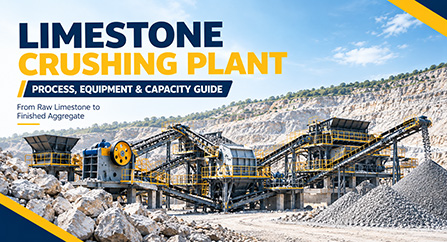
For limestone process planning, visit Limestone Crushing Plant: Process, Equipment and Capacity Guide. For hard-rock process planning, visit Basalt Crushing Plant: Equipment, Process and Capacity Guide.
6. Which Supporting Equipment Controls Real Output?
The main crusher is important, but it is not the only factor that determines stable plant output. Many crushing plants lose capacity because the feeder, screen, return conveyor, product conveyor or stockpile arrangement is undersized or poorly matched.
| Equipment | Main Role | Risk if Improperly Selected |
|---|---|---|
| Hopper and Vibrating Feeder | Buffer raw material and provide continuous, controlled feed | Crusher starvation, surge feeding, bridging and unstable throughput |
| Pre-screen or Grizzly Section | Remove fines, soil and undersize material before primary crushing | Unnecessary crusher load, faster wear and lower efficiency |
| Vibrating Screen | Separate saleable products and control oversized return material | Wrong grading, high recirculating load and lower saleable output |
| Return Conveyor | Send oversized material back into the crushing circuit | Manual rehandling, uncontrolled oversize and unstable product quality |
| Product Conveyors | Move and separate finished aggregate to stockpiles | Material bottlenecks, mixed products and slow truck loading |
| Electrical Control System | Coordinate feeder, crusher, screen and conveyor operation | Overload, poor start-up sequence and avoidable downtime |
Screening and return flow are especially important in multi-size aggregate production. If the screen is undersized or the return conveyor cannot manage oversize material, the crushing circuit may produce high recirculating load instead of stable saleable output.
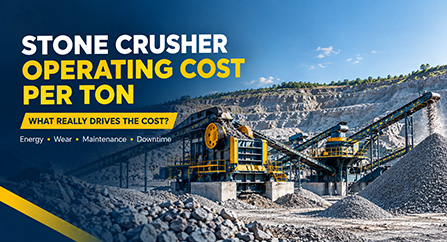
For cost-per-ton planning, read Stone Crusher Operating Cost Per Ton: Calculation and Cost Reduction.
7. Should the Plant Be Stationary, Modular or Mobile?
| Plant Type | Suitable Project | Main Customer Benefit |
|---|---|---|
| Stationary Crushing Plant | Long-term quarry, permanent site and high-volume aggregate production | Optimized layout, stable long-term operation and easier future expansion |
| Modular Crushing Plant | Projects requiring staged investment or faster installation | Flexible configuration and easier capacity adjustment |
| Tyre Type Mobile Crusher Plant | Road projects, temporary sites and locations with suitable towing routes | Flexible relocation and relatively fast deployment |
| Tracked Crushing Plant | Frequent relocation, quarry-face movement, recycling and difficult ground conditions | Self-propelled site movement and strong field adaptability |
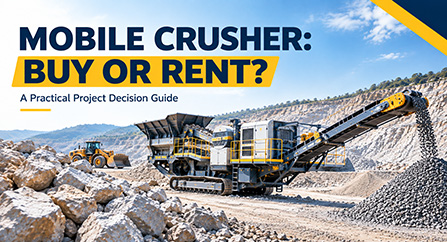
For projects with changing work locations, compare project duration, annual operating hours, material type, transport frequency and ownership cost before selecting rental or purchase. Read Mobile Crusher: Buy or Rent? A Practical Cost and Project Decision Guide.
8. How Should You Plan Layout, Dust Control and Future Expansion?
A crushing plant layout should include more than the main crushers. Plan space for raw-material unloading, hopper loading, maintenance access, lifting equipment, screens, conveyors, product stockpiles, truck loading, electrical room, dust-control systems and safe traffic routes.
For future growth, reserve space, power and material-handling interfaces for an additional crusher, vibrating screen, sand making machine, sand washing machine, return conveyor or product conveyor. This helps avoid major reconstruction when capacity or product requirements change.
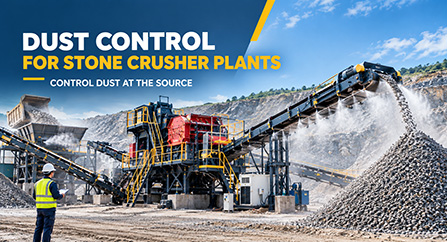
Dust-control planning should begin during plant design. Crusher feed points, crusher discharge points, vibrating screens, conveyor transfer points and stockpile discharge areas are common dust-generation locations. Depending on the material and local requirements, water spray, enclosure, conveyor sealing, local extraction or dry dust collection may be considered.
NIOSH notes that silica content and exposure risk vary by material: sandstone and granite average about 70% to 90% silica, while limestone averages about 20% to 30%. For enclosed cabs and operator booths, NIOSH reports dust reductions of 65% to 95% after upgrades compared with outside levels; it also identifies positive cab pressure above 0.01 inches of water gauge and high-efficiency filtration as important factors. Project requirements and local regulations must always be verified before final design.
What Information Is Needed for a Crushing Plant Recommendation?
To recommend a suitable 100 TPH, 200 TPH or 300 TPH crushing and screening plant, HAMAC needs the project information below.
| Information Needed | Example |
|---|---|
| Raw material | Limestone, granite, basalt, river stone, dolomite, concrete or construction waste |
| Material condition | Maximum feed size, moisture, clay content, fines content, hardness and material photos |
| Target capacity | 100 TPH, 200 TPH, 300 TPH or higher |
| Final product sizes | 0-5 mm, 5-10 mm, 10-20 mm, 20-31.5 mm or local aggregate standard |
| Plant type | Stationary, modular, tyre type mobile or tracked mobile |
| Operating schedule | Single shift, double shift or continuous operation |
| Project location | Country, voltage, site layout, climate and delivery requirement |
| Special requirements | Sand making, washing, dust control, automation or future expansion |
Do you need a stationary crushing plant, modular crushing plant or mobile crushing and screening solution?
Is your target capacity 100 TPH, 200 TPH, 300 TPH or higher?
What material are you processing, what is the maximum feed size, and which aggregate sizes do you need?
Send HAMAC your material photos, maximum feed size, target capacity, final product sizes and project location. Our team can recommend a project-based crushing and screening plant configuration.
Contact HAMAC for a Stone Crushing Plant Design Recommendation