



Primary vs Secondary vs Tertiary Crushing: How to Choose the Right Crusher
Primary vs Secondary vs Tertiary Crushing Equipment: How to Choose the Right Combination
Choosing crushing equipment is not really about finding the single "best" machine. It is about deciding how to split the job of reducing raw rock into finished aggregate across primary, secondary and tertiary crushing stages, and picking the right machine for each stage. Get this wrong, and even a good crusher will underperform, wear out faster, or fail to hit your target production rate.
This guide explains what each crushing stage actually does, walks through real jaw crusher, cone crusher and impact crusher specifications, and gives you a decision matrix to map your material, feed size and target capacity to a specific equipment combination.
Why Selecting the Wrong Crushing Stage Is More Costly Than Selecting the Wrong Model
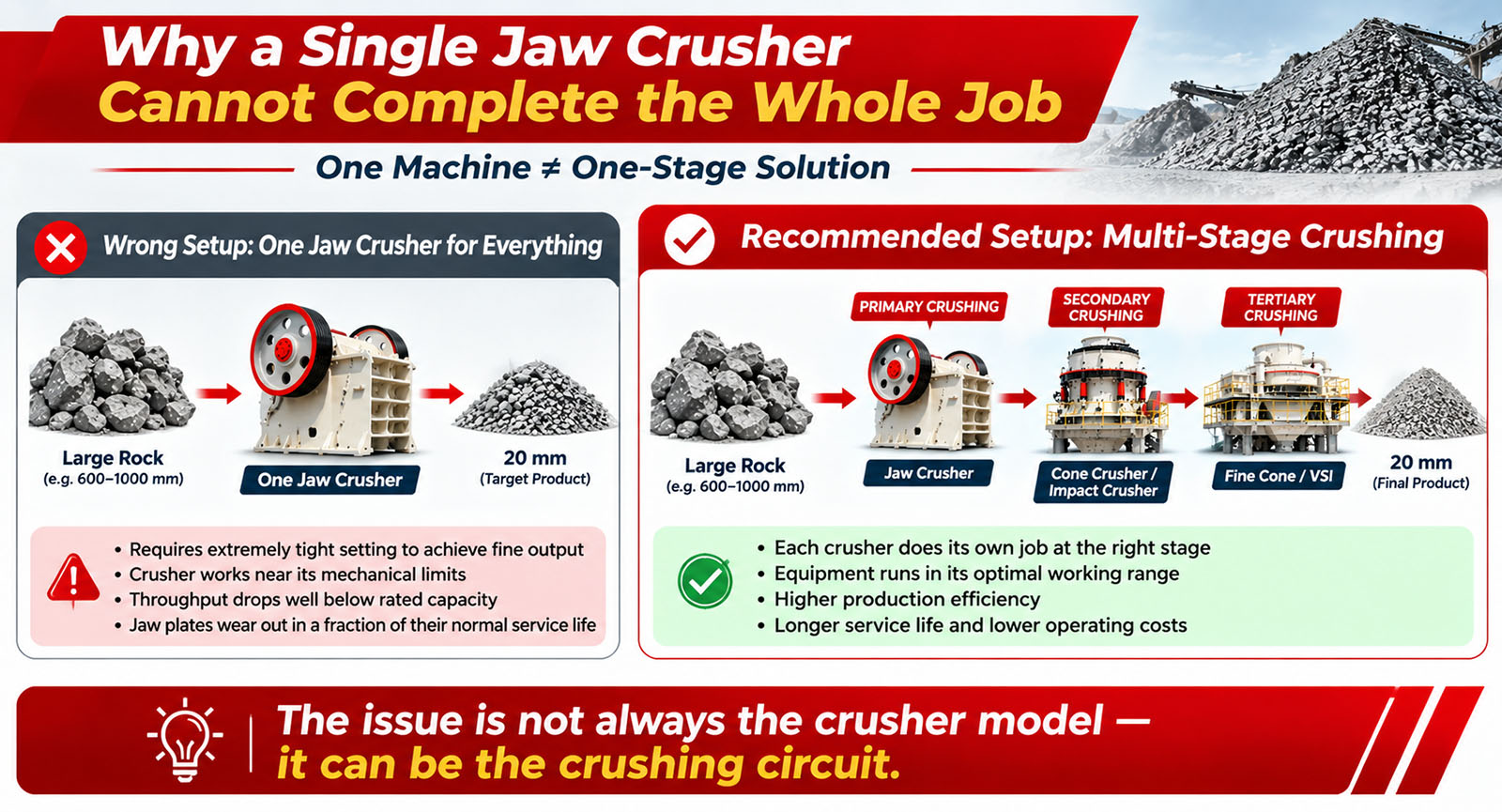
Picture a customer who buys only a large jaw crusher and tries to push it to produce 20 mm finished aggregate directly. To hit that fine output, the operator has to run the closed-side setting far tighter than the machine was designed for. The jaw crusher works constantly near its mechanical limits, throughput drops well below the rated capacity, and jaw plates wear out in a fraction of their normal service life.
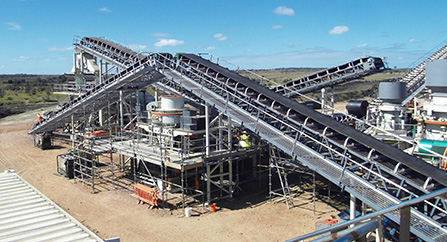
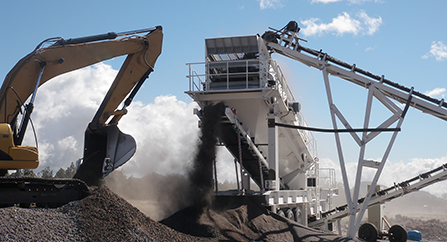
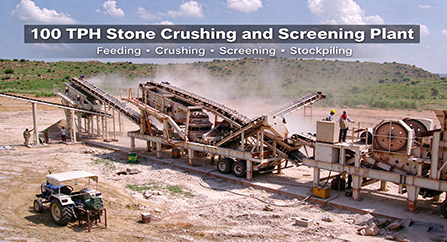
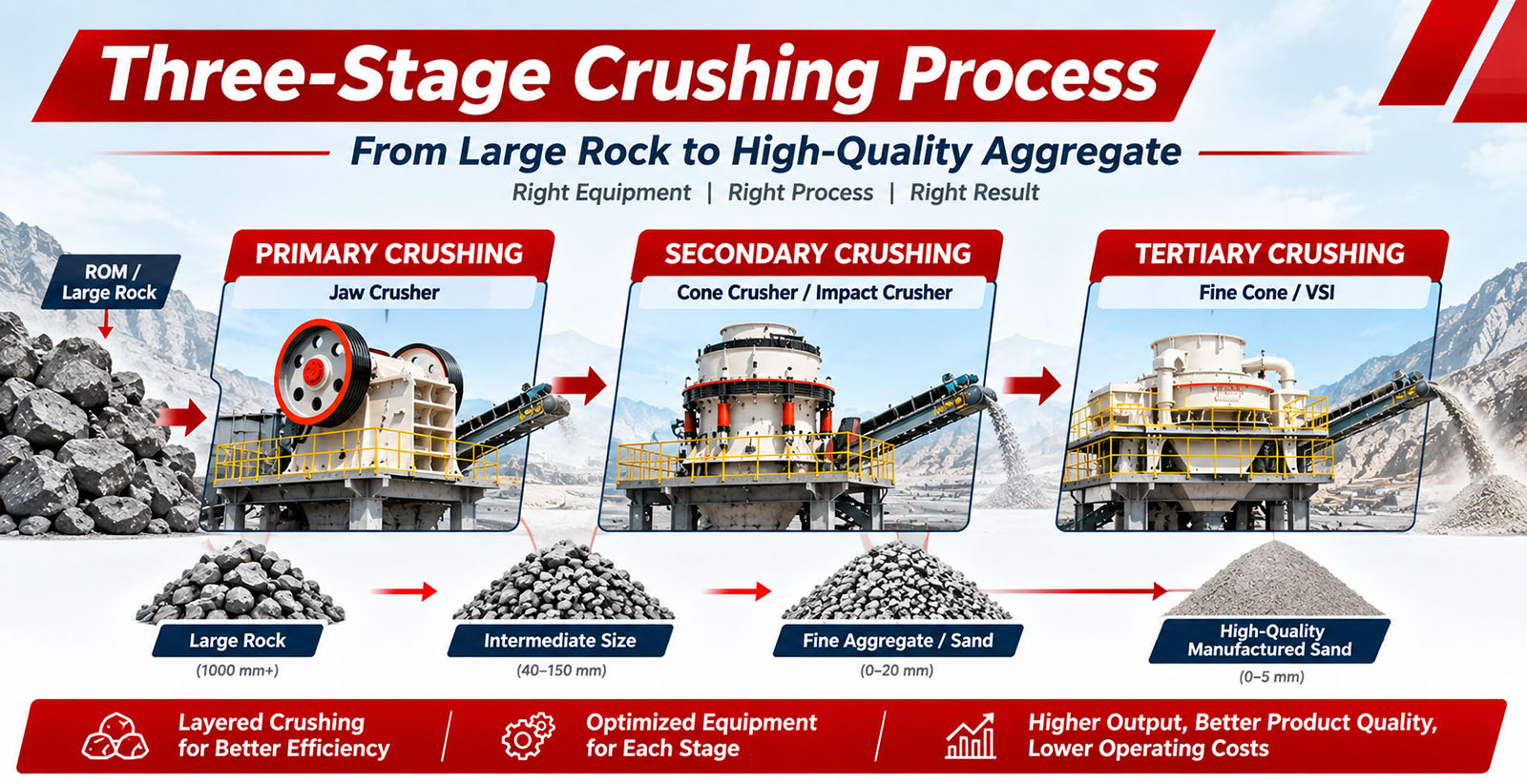
The real problem here isn't the jaw crusher model — it's that one crushing stage was asked to do the job of three. A properly designed three-stage crushing process (primary, secondary, tertiary) exists precisely because no single machine efficiently spans the full range from 1000 mm raw rock down to 10 mm finished sand and gravel.
What Each Crushing Stage Actually Does
| Stage | Typical equipment | Crushing method | Job focus |
|---|---|---|---|
| Primary crushing | Jaw crusher | Compression, large feed opening | Accept large, irregular raw rock and reduce it to a manageable intermediate size |
| Secondary crushing | Cone crusher or impact crusher | Compression (cone) or impact (horizontal shaft) | Reduce intermediate material toward target aggregate size with better control |
| Tertiary crushing | Fine-chamber cone crusher or VSI/sand-making machine | Compression or high-speed impact | Fine-tune final particle size and improve particle shape for manufactured sand or high-spec aggregate |
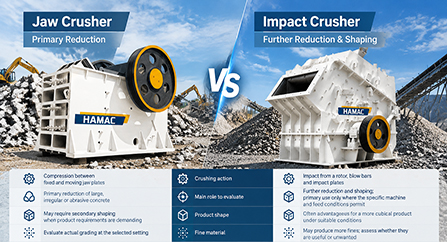
Compression crushing (jaw and cone) generally holds up better against hard, abrasive rock such as granite, basalt and iron ore, while impact crushing (horizontal shaft impact crushers) tends to work well on softer, less abrasive material and can improve particle shape.
Primary Crushing: How to Read a Jaw Crusher Feed Size Chart
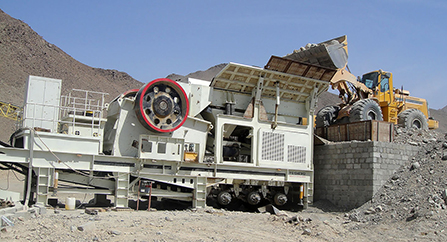
The PE Series jaw crusher covers a wide range of feed openings and capacities, which makes it possible to match a specific model to your maximum raw material size rather than guessing.
| Model | Feed opening | Max feeding size | Output range | Capacity | Motor power |
|---|---|---|---|---|---|
| PEX250×750 | 250×750 mm | 210 mm | 25–60 mm | 13–35 t/h | 30 kW |
| PE500×750 | 500×750 mm | 425 mm | 50–100 mm | 40–110 t/h | 55 kW |
| PE600×900 | 600×900 mm | 500 mm | 65–180 mm | 80–180 t/h | 55–75 kW |
| PE750×1060 | 750×1060 mm | 630 mm | 80–180 mm | 110–320 t/h | 90–110 kW |
| PE900×1200 | 900×1200 mm | 780 mm | 95–225 mm | 220–450 t/h | 110–132 kW |
| PE1000×1200 | 1000×1200 mm | 850 mm | 195–280 mm | 280–550 t/h | 110–132 kW |
| PE1200×1500 | 1200×1500 mm | 1020 mm | 150–300 mm | 400–800 t/h | 160–220 kW |
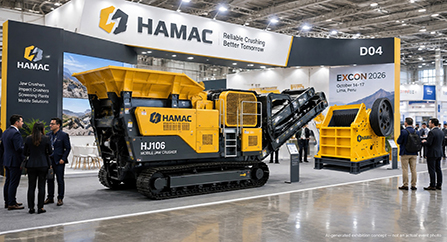
For higher-capacity or heavier-duty primary crushing, HAMAC's European Tech. jaw crusher series covers larger feed openings up to 1600×1200 mm with capacities up to 650 t/h, suitable for high-tonnage granite, basalt and iron ore operations.
The practical rule: identify the largest occasional block size your quarry or mine produces — not the average size — and select a jaw crusher whose feed opening comfortably exceeds it. Undersizing here causes bridging and repeated downtime long before you ever reach the crusher's rated tonnage.
Secondary Crushing: Cone Crusher vs Impact Crusher
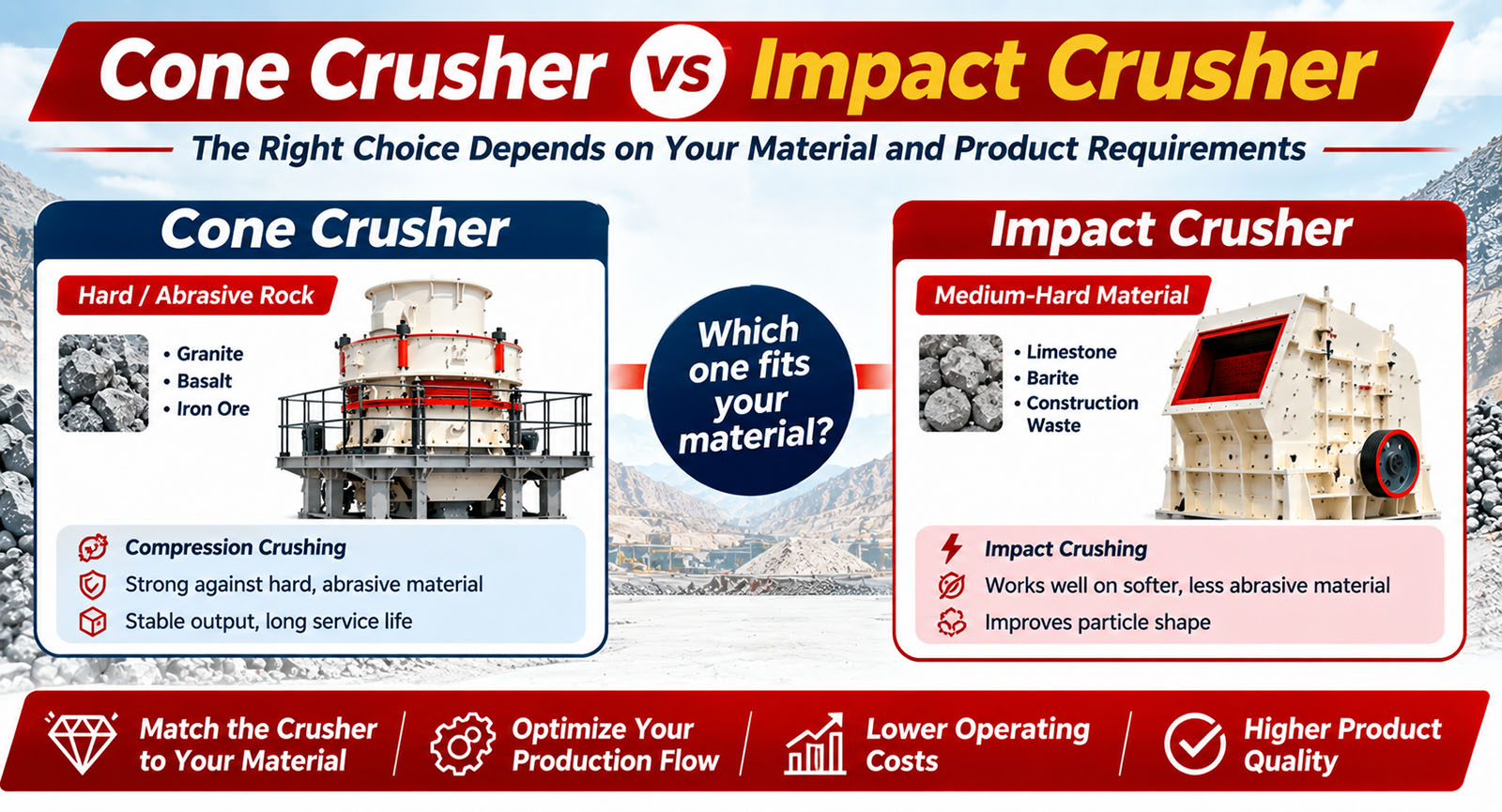
Once the jaw crusher has produced an intermediate-sized product, the secondary stage decides whether the line prioritizes wear resistance on hard rock or particle shape on softer material.
| Decision factor | Choose a cone crusher | Choose an impact crusher |
|---|---|---|
| Material hardness | Hard, highly abrasive: granite, basalt, iron ore | Medium-hardness: limestone, barite, construction waste |
| Wear-part cost priority | Willing to invest in liners for long service life on hard rock | Lower liner cost on softer material, but faster wear on hard rock |
| Particle shape requirement | Good cubical shape via compression | Very good cubical shape via impact, often better on soft/medium rock |
| Typical capacity range (HAMAC) | 27–1050 t/h depending on model | 30–800 t/h depending on model |
HAMAC's PF Impact Crusher series ranges from the PF-1007 (30–70 t/h, 300 mm max feed) up to the PF-1820 (600–800 t/h, 800 mm max feed), making it suitable as either a secondary crusher for softer rock or a primary-stage option in some limestone and construction-waste applications.
Choosing the Right Cone Crusher Type for Secondary and Tertiary Duty
HAMAC offers four cone crusher families, each suited to different hardness, capacity and budget requirements.
| Cone crusher type | Representative model | Feed limit / opening | Discharge / outlet range | Capacity |
|---|---|---|---|---|
| Compound Cone Crusher | HMC1400C-D (coarse cavity) | 235 mm | 30–60 mm | 210–530 t/h |
| Symons Cone Crusher | SCC 4 1/4' (medium cavity) | 210 mm open side | 13–38 mm | 109–181 t/h |
| HCS Hydraulic Cone Crusher | HST160 (S1 coarse cavity) | 360 mm | 25 mm min. opening | 120–345 t/h |
| HP Hydraulic Cone Crusher | HPT300 (Medium chamber) | 150 mm | 15 mm min. discharge | 115–440 t/h |
The HCS hydraulic cone crusher is particularly well-suited to tertiary and ultra-fine crushing: its HST315 model in H3 (ultra-fine) cavity configuration can bring material down to a 13 mm minimum opening, which is the kind of precision needed when a customer requires a tightly controlled final aggregate size rather than just "roughly crushed" material.
Tertiary Crushing: When Do You Actually Need a Third Stage?
Not every project needs three crushing stages. A two-stage jaw crusher plus cone crusher line is often enough for coarse and medium aggregate (20–40 mm and up). A tertiary stage becomes necessary when:
| Situation | Tertiary crushing needed? | Why |
|---|---|---|
| Target product is 20–40 mm road base or rip-rap | Usually not | Primary + secondary can typically reach this size range directly |
| Target product is 5–20 mm concrete aggregate with strict shape requirements | Often yes | A fine-cavity cone crusher or impact crusher improves cubicity and size consistency |
| Target product includes manufactured sand (0–5 mm) | Yes | Requires a dedicated fine-crushing or VSI sand-making stage after secondary crushing |
| Feed material is highly variable in size | Often yes | A closed-circuit tertiary stage with screening evens out product consistency |
Adding an unnecessary tertiary stage increases capital cost and maintenance complexity without improving product value — this is why the decision should be driven by the finished product specification, not by "more stages must be better."
Decision Matrix: Matching Material, Capacity and Product to a Crusher Combination
The table below maps typical project profiles to specific HAMAC equipment combinations, using real feed size, discharge size and capacity data from the technical specifications above.
| Material | Target capacity | Target product | Primary stage | Secondary stage | Tertiary stage |
|---|---|---|---|---|---|
| Limestone | 110–180 t/h | 0–30 mm road base aggregate | PE750×1060 jaw crusher | PF-1214 impact crusher | Often not required |
| Granite | 220–450 t/h | 5–40 mm aggregate | PE900×1200 jaw crusher | HST160 cone crusher (coarse cavity) | HST160 (fine cavity) for finer sizing |
| Basalt | 210–530 t/h | 10–30 mm high-strength aggregate | 6CX140 European Tech. jaw crusher | HMC1400C-D compound cone crusher | HMC1400S-X fine cavity if manufactured sand is needed |
| Iron ore | 280–550 t/h | Sized feed for beneficiation | PE1000×1200 jaw crusher | HPT400 hydraulic cone crusher | HPT400 (fine chamber) for final sizing |
Note that within the same 250 t/h capacity target, the crusher model choice can still differ significantly depending on whether the material is soft limestone or highly abrasive granite — capacity alone never tells the full story.
Common Mistakes That Cost More Than the Equipment Itself
Based on how customers commonly misjudge crushing circuit design, these are the pitfalls worth checking before finalizing any equipment order:
| Common mistake | Consequence |
|---|---|
| Buying only primary and secondary crushers when the product spec actually requires manufactured sand | Constant rework, poor particle shape, and rejected batches from concrete customers |
| Sizing the secondary crusher's capacity lower than the primary crusher's output | The secondary stage becomes the bottleneck; the whole plant is capped at the smaller number regardless of the jaw crusher's rating |
| Choosing a cone crusher discharge setting that is far tighter than needed "just to be safe" | Lower throughput, higher power draw per tonne, and accelerated liner wear |
| Ignoring feed distribution and pre-screening ahead of the secondary crusher | Uneven liner wear, reduced crusher life, and inconsistent product sizing |
Data to Prepare Before Requesting a Crushing Line Quotation
To get an accurate, project-specific equipment combination rather than a generic price list, prepare the following before contacting a supplier:
| Data to prepare | Why it matters |
|---|---|
| Material type and hardness (granite, basalt, limestone, iron ore, etc.) | Determines compression vs. impact crushing and wear-part specification |
| Maximum occasional feed size, not just average size | Determines the required jaw crusher feed opening |
| Target capacity (tph) and daily operating hours | Determines equipment size and whether multiple units are needed at any stage |
| Final product specification(s), including whether manufactured sand is required | Determines whether a tertiary crushing stage is necessary |
| Existing equipment on site, if any | Ensures new equipment integrates into the current crushing circuit |
With this information, HAMAC's engineering team can design a complete primary–secondary–tertiary production line, select specific models from the jaw crusher, cone crusher and impact crusher ranges, and provide a configuration list and quotation matched to your actual production goals.
Frequently Asked Questions About Crushing Stage Selection
Do I always need three crushing stages?
No. Many aggregate projects producing 20–40 mm road base or coarse material only need a primary jaw crusher plus a secondary cone or impact crusher. A tertiary stage is mainly needed for fine aggregate, manufactured sand, or strict particle-shape requirements.
Can a cone crusher replace a jaw crusher for primary crushing?
Generally no. Cone crushers are designed for a more controlled, intermediate feed size and cannot safely accept the very large, irregular blocks that a jaw crusher's wide feed opening is built to handle.
Why does my secondary crusher choke even though my jaw crusher works fine?
This is often a capacity mismatch — if the secondary crusher's rated tph is lower than the jaw crusher's actual output, or the feed is unevenly distributed into the chamber, the secondary stage becomes the bottleneck.
How do I know if I need a tertiary crusher for manufactured sand?
If your target product includes 0–5 mm manufactured sand or requires a highly cubical shape for high-spec concrete, a tertiary fine-crushing or VSI stage is typically required after standard secondary crushing.
Selecting crushing equipment is ultimately about assigning the right job to the right stage: let the primary crusher handle large, irregular rock; let the secondary crusher refine size and shape; and only add a tertiary stage when your final product genuinely requires it. Matching real feed size, discharge range and capacity data — like the specifications above — to your material and production target is what turns a crushing line into a reliable, cost-efficient operation rather than a series of equipment guesses.